By Karine Vandenborre
Reading and Understanding Your Horse's Body Language
Why Understanding Your Horse's Body Language Matters
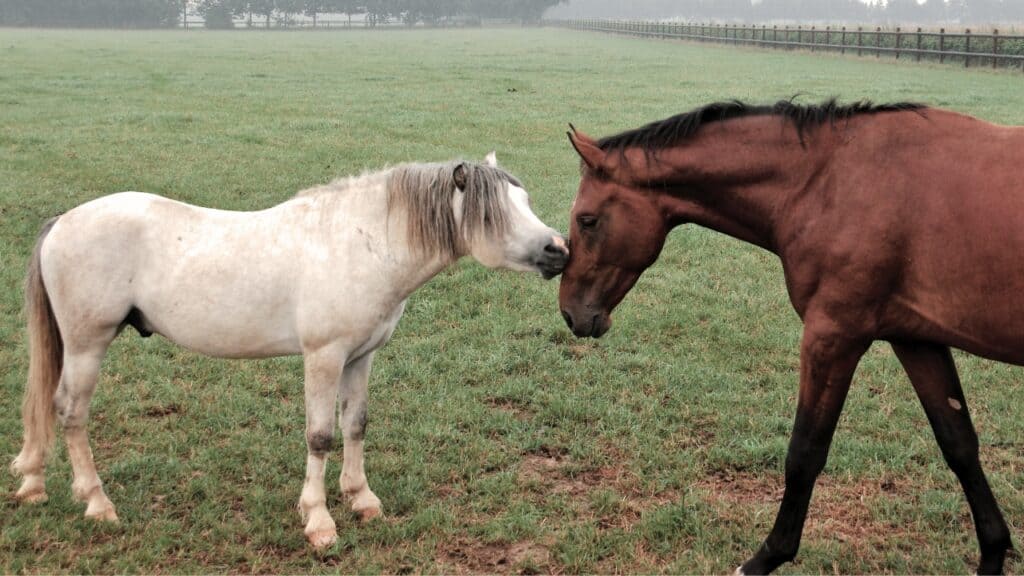
Horses are constantly communicating. They communicate mainly through body language and they often use very subtle cues. Understanding horse body language is not just a skill for trainers, it's essential for anyone who spends time with horses. Whether you are actually training your horse, or whether you are just spending time with your horse or taking care of horses, knowing how to read their body language helps build trust, improves safety, helps you communicate better, and deepens the connection you have with your horse.
Important note: What you'll read in this article covers the basics of horse body language. However, true horse communication goes far beyond these individual signals. It's about reading the complete story, the subtle micro-movements, the energy you feel from your horse, and how different signals combine to create meaning. Real mastery comes from understanding the full context and understanding what a combination of signals/cues means.
How Horses Communicate Through Body Language
They use posture, movement, energy, and facial expressions to express their emotions and intentions. Horses communicate quickly and subtly. A tiny movement, like an ear twitch or a slight tilt of the head, can speak volumes. The way they breathe is also important communication and gives you important information.
They also use vocal communication, but that's less common than body communication. In this article, I'll focus on how horses communicate with their bodies. One of the most important things to remember is not to jump to conclusions about a horse's behavior. Many people assume that when a horse pins its ears, turns away, or shows resistance, it's "being bad" or "misbehaving." But that's not what's really going on.
Your horse is not misbehaving. Your horse is communicating.
Everything a horse does is, in essence, communication. Every flick of an ear, every shift in posture, every step away, it all means something. So before reacting, pause. Look at the whole picture: your horse's body, his personality, the environment, the context, and what may have led up to this moment.
This mindset shift, seeing everything a horse does as communication rather than behavior, changes how you see your horse and how you react to your horse.
Read this article if you want to dive deeper into that: Why Your Horse Doesn't Need to Be Fixed - A New Way of Understanding Horse Behavior
How to Read Horse Ears and What They Mean
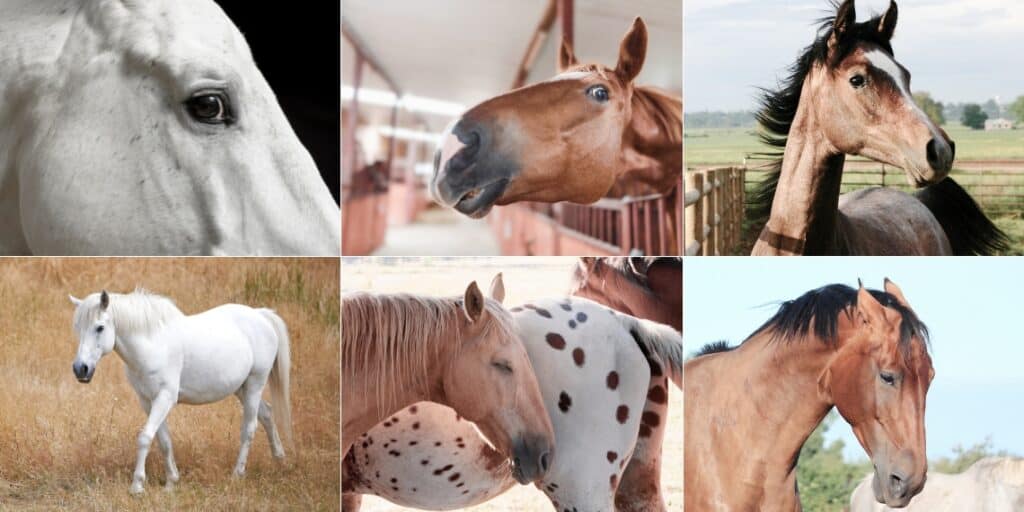
A horse's ears are a very expressive part of its body. They act almost like radar, picking up sounds and expressing feelings.
• Ears forward: Attentive, interested, curious.
• Ears back (not pinned): Listening to something behind them.
• Ears pinned flat back: Angry, defensive, in pain.
• Ears flicking back and forth: Alert but unsure, scanning the environment.
• One ear forward, one back: Splitting attention between two things.
Learning to "follow the ears" helps you understand what your horse is focused on and how they feel in any given moment.
Reading the Eyes
The eyes are a window to a horse's emotional state.
• Soft eyes: Relaxed, content, calm.
• Wide eyes with visible white (sclera): Fear, surprise, or pain.
• Blinking or half-closed eyes: Sleepy, trusting, or relaxed.
Horse Mouth and Lip Signals Explained
• Tight mouth: Pain, stress, discomfort, tension
• Loose lips: Relaxation, confidence
• Lip licking, yawning, chewing: Often a sign of release or relaxation, especially after a period of stress. It can also be a calming signal.
• Snapping lips (foal): calming signal, submissive language
• Quivering muzzle or upper lip twitch: Stress or uncertainty.
What Your Horse’s Nostrils Tell You
• Flared nostrils: Stress, agitation, or excitement.
• Soft, loose nostrils: Relaxation
Facial tension often shows before full-body reactions. A tight muzzle, clenched jaw, or twitching lips can signal discomfort before it escalates into bigger signals.
Understanding Tail Position and Movement in Horses
A horse's tail is like a mood meter. While it helps swat flies, it also provides clues about emotional and physical states.
• Relaxed, gently swaying tail: calm and content.
• Tail clamped down: Fear, anxiety, discomfort, or cold.
• Swishing tail: Irritation, frustration, or a warning.
• High tail: Excitement or high energy.
Watch how the tail moves in different contexts to build awareness of its meaning.
What Head Position and movements Says About Your Horse
• Lowered head: A horse with a relaxed, slightly lowered head is comfortable and not highly alert.
• Head held high: Can mean the horse is tense, unsure, or startled. It might be anxious or just alert/curious about something in the distance.
Horse Body Language in Different Emotional States
Horses express emotions clearly through their body posture and movements. Here are some common emotional states and how they appear:
Calm & Relaxed
• Soft eyes, slow blinking
• Ears gently moving
• Lowered head
• Relaxed nose and lips
• Can have a resting hind leg
• Body relaxed, soft muscles
Curious or alert
• Ears forward
• Eyes wide but soft
• Forward-leaning stance
• Nose stretched out toward object or person
• Or head a bit higher
Fearful or Nervous
• Head raised, nostrils flared
• Tense muscles
• Tail clamped or swishing
• White of eye showing
• A lot of moving or the opposite: freezing (when in fear)
Frustrated or Irritated
• Swishing tail
• Head tossing
• Pawing or stomping
• Pinned ears or pinned-and-release ear movement
Insecure or Doubting
• Head slightly lowered but tense
• Ears shifting back and forth
• Slow or hesitant movement
• Frequent looking toward handler or environment
• Upper lip tenses and pushes slightly forward
Confident
• Balanced posture
• Relaxed muscles
• Curious expression
• Forward ears, open body stance
In Pain or Discomfort
• Tense or rigid body
• Flinching or avoidance of touch
• Tail clamped or swishing
• Grinding teeth or tight muzzle
Common Misinterpretations of Horse Body Language
It's easy to misread horse behavior. For example:
• A yawning horse may be releasing tension, not sleepy.
• A swishing tail might mean annoyance, not just flies.
• Pinned ears during grooming might indicate discomfort, not aggressiveness.
To avoid misinterpretation:
• Observe the whole body and not just one part of the body
• Watch in context: What just happened? What's going on around the horse?
• Learn your individual horse's past, current habits, and expressions.
The signals described above are foundational knowledge, but horse communication is far more nuanced. Every horse is unique, and the same signal can mean different things depending on the horse's personality, history, the situation, and what other signals are happening simultaneously.
When horses feel understood, and when you react in the right way to their body language (their communication), they become more relaxed, trusting, and confident.
Understanding Subtle Signs and Micro-Expressions in Horses
What I've just described is only a fraction of horse body language. There is so much more to say and learn about this.
The most important communications are often the smallest ones: a tiny tilt of the head, a brief looking away, an ear toward you for a split second, a barely noticable muscle tension, a shift in breathing, or a subtle change in energy that you feel rather than see.
True horse communication isn't just about recognizing separate signals. It's about:
• Reading combinations of signals that tell a complete story
• Feeling the horse's energy and emotional state
• Understanding the flow and timing of communication
• Recognizing micro-expressions that happen in fractions of a second
• Developing an intuitive sense of what your horse is telling you
The basic signals in this article are your foundation, but developing your ability to read these micro-expressions and energy shifts takes time, practice, and deep observation. This leads to a much deeper, more intuitive communication and connection with your horse.
How to Practice and Improve Your Reading & Understanding of Horse Body Language?
• Spend time observing horses.
• Keep a journal of what you notice.
• Take videos and review body language frame by frame.
• Ask an experienced horseperson for feedback.
• Come explore the world of horse communication with me inside the Liberty Connection & Beyond Program, and also discover how you can build an enjoyable & natural bond with your horse.
Becoming a skilled Horse Communicator
The more you observe horse language and the more you practice with your horse, the more fluent you become.
Be patient.
Be present.
Keep learning.
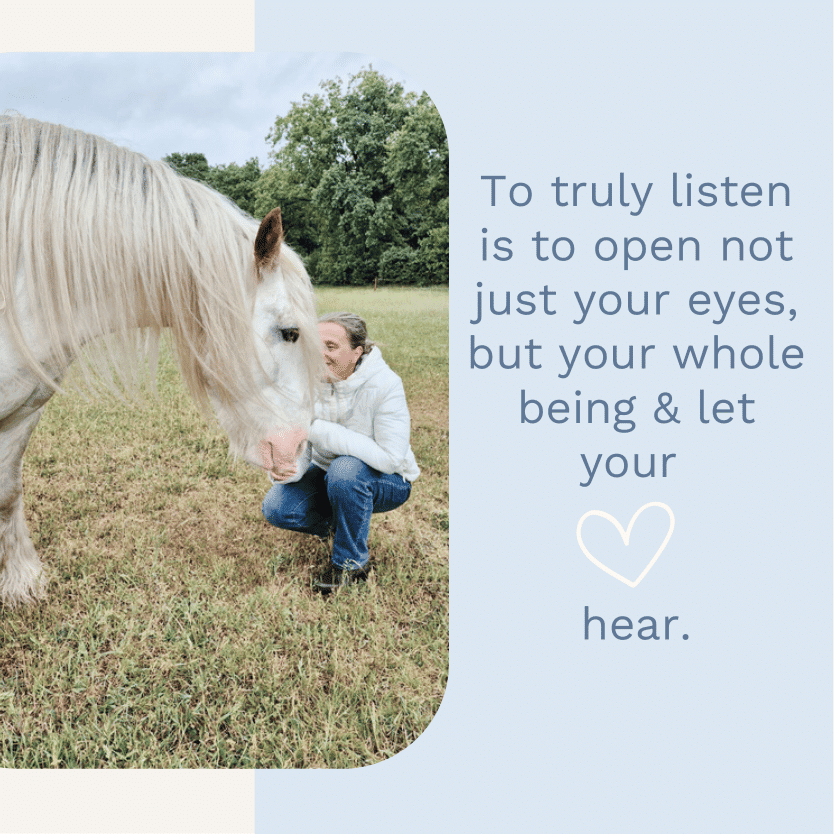
Every horse will teach you something new about communication if you're willing to listen with your whole being, so not just your eyes, but also with your heart.
3 replies to "Reading and Understanding Your Horse’s Body Language"
Dag Karine
Wat een heerlijk artikel!
En nu aan de slag.
Hartelijk bedankt.
Warme groetjes
Marleen
Hey Marleen, blij dat je er iets aan hebt!
thanks for all of the info Karine Vandenborre this really helped me with my 7th grade science fair